




Cancer Care Clinic
Adjunctive and Integrative therapies to aid in decreasing side-effects and improve pain tolerance, alongside your conventional cancer treatment
- Supervised by Dr. Price
- Alongside oncology care
- Education for families
Overview
Cancer Care Clinic
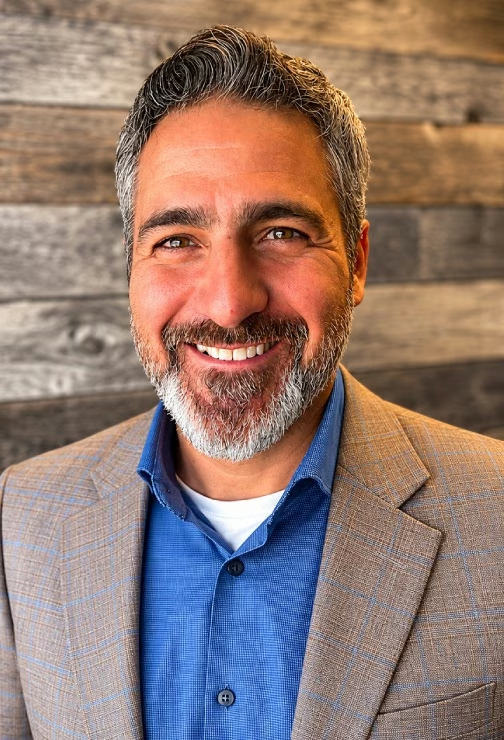
Our Cancer Care Clinic is supervised by Dr. Allan Price, ND, whose clinical practice has focused on integrative and adjunctive cancer care for over 25 years.
Naturopathic cancer care is offered alongside, never in place of, the treatment plan directed by your oncology team. Our goal is to help you tolerate treatment, manage symptoms, and feel informed and supported throughout your care.
What Integrative Naturopathic Cancer Care May Help With:
- Quality of life: supportive therapies such as nutrition counselling, acupuncture, and lifestyle strategies may help with energy, appetite, nausea, and pain alongside your conventional treatment.
- Treatment tolerance: some adjunctive therapies have been studied for their potential to help patients tolerate chemotherapy and manage specific side effects.
- Education and support: for you and your family, so you feel informed and involved at every step.
We do not claim that naturopathic care improves treatment efficacy, increases survival, or reduces recurrence. Current research on adjunctive naturopathic cancer care is mixed, and any question about your prognosis should go to your oncology team. See Resources below.

Our team strongly believes in the importance of integrating non-conventional and complementary cancer care treatments that have been studied for safety, alongside conventionally recommended treatments.
Conventional cancer treatment often includes surgery, radiation and chemotherapy. Alongside it, complementary cancer therapy includes therapeutic nutritional support, enzyme therapy, diet therapy, detoxification of toxic accumulation, positive lifestyle reinforcement, stress control, counselling and biofeedback.
While additional information is still needed, many clinical trials have demonstrated positive improvement in treatment outcomes, which include:
- improved overall quality of life
- reduced rates of recurrence
- reduced adverse reactions
(See resource section below.) Note that adjunctive therapy is not a substitute for conventional oncology care and outcomes vary by individual and diagnosis.
How it works
How biological therapy works
Biological therapy for cancer is a type of treatment that uses the body’s immune system to kill cancer cells.
Biological therapy for cancer is used in the treatment of many types of cancer to prevent or slow tumor growth and to prevent the spread of cancer.
The goal of biological therapy
The goal of biological therapy for cancer is to induce your immune system to recognize and kill cancer cells.
Your body’s immune system fights invaders, such as germs, throughout your body. Your immune system should also recognize cancer cells as abnormal, but it doesn’t always do that. Cancer cells can develop an ability to hide from immune system cells. Or cancer cells can disable or inhibit immune system cells from acting.
In general, biological therapies work by:
- Inducing the immune system to attack cancer cells. There are several ways biological therapy treatments can achieve this goal. As an example, chemicals that stimulate your immune system cells could be injected into your body. Or a sample of your immune system cells could be trained in a lab to attack cancer cells before being reintroduced to your body.
- Making cancer cells easier for your immune system to recognize. Biological therapy can also target the cancer cells, turning on or off cell signals that help them elude the immune system cells. As an example, drugs called immune checkpoint inhibitors can target specific chemical receptors on cancer cells, blocking the signals the cancer cells send to suppress the immune system.
Several types of biological therapy exist, including:
- Adoptive cell transfer
- Angiogenesis inhibitors
- Bacillus Calmette-Guerin therapy
- Biochemotherapy
- Cancer vaccines
- Chimeric antigen receptor (CAR) T-cell therapy
- Cytokine therapy
- Gene therapy
- Immune checkpoint modulators
- Immunoconjugates
- Monoclonal antibodies
- Oncolytic virus therapy
- Targeted drug therapy
Many types of biological therapy are available only in clinical trials. There are a number of supportive treatments available at Pure Wellness Group that may be added to your care plan alongside the treatment directed by your oncology team.
Biological therapy for cancer is a very active area of cancer research
Goals
Goals of Integrative Cancer Therapy
Your oncology team directs the treatment of the cancer itself. Naturopathic care focuses on supporting you as a whole person alongside that treatment.
The goal of implementing natural and adjunctive cancer therapies is to support those who are undergoing conventional treatment for cancer. It may help in reducing the side effects of conventional treatments and in supporting healthy processes in the body.

Natural therapies
Natural Therapies in Cancer Research
Laboratory research has explored whether some natural supplements and therapies have anti-tumour activity. These are cellular and animal-model findings, not proof of clinical benefit in patients. They include, but are not limited to, the following:
- EGCG (Green tea extract)
- Curcumin (Turmeric)
- Modified Citrus Powder
- Melatonin
- Intravenous Vitamin C
- Viscum Album (Mistletoe) Injection
Mistletoe (pictured) is a widely used complementary therapy in integrative cancer care. It is mostly used to support quality of life and the tolerability of chemotherapy. Evidence for any effect on tumor control or survival is mixed. Mistletoe extracts contain a variety of biologically active compounds such as lectins, viscotoxins, oligo- and polysaccharides and triterpene acids.

Vitamin C
Intravenous Vitamin C
High dose intravenous Vitamin C therapy is used by some integrative practitioners as an additive treatment alongside conventional cancer care. Some studies report that it may help reduce the side effects of conventional treatments. We do not claim that it makes those treatments more effective or that it treats the cancer itself.
In laboratory studies, large amounts of vitamin C are converted into hydrogen peroxide (H2O2), which can be toxic to cells. Healthy cells have a high level of an enzyme called catalase which can protect against H2O2, while many of the cancer cells studied had less of it and were damaged by the H2O2 produced. These findings describe a possible mechanism; they are not proof of benefit in patients.

Diet
Eating Right (Diet Therapy)
Diet is an important aspect of supporting your health during cancer treatment. It is important to undertake specialized dietary changes that take into consideration current conventional treatments, your state of health and progression of the disease.
Integrating diet modification carefully into a care plan, alongside your conventional treatment, has the potential to offer benefit.

After treatment
After Completion of Chemotherapy and Radiation
Despite notable improvements in chemotherapy and radiation technologies, these approaches can affect the immune system, and many people look for ways to support their health after treatment.
Complementary therapies may help support the immune system and quality of life after these treatments.
Common concerns include weakness, fatigue, and lack of mental focus. Proper diet, exercise, nutrients, vitamins and minerals are important during and after chemotherapy and/or radiation to support the body’s recovery after treatment.

Combining
Combining Natural Therapies with Conventional Treatments
Each patient is unique and therefore many factors need to be considered including: the type of cancer; the stage; what conventional treatments have or will been done, etc. There are a variety of natural treatments that may be used alongside conventional treatments, and each needs to be considered against your current treatment plan.
At Pure Wellness Group, we look closely at the research behind our treatments. There are many supplements claiming to be the “magic cure”. We aim to use only supplements which have been scientifically studied in individuals being treated for cancer.

Immune support
Supporting Your Immune System (Botanical Medicine)
The immune system plays a role in how the body responds to cancer. Some integrative care plans include nutrients, mushroom extracts and herbal remedies intended to support immune function. These should always be discussed with your oncology team, particularly during chemotherapy or radiation treatment.

Research
Resources
- Long-term survival of a patient with advanced pancreatic cancer under adjunct treatment with Viscum album extracts: A case report. Werthmann PG, Kempenich R, Lang-Avérous G, Kienle GS. World J Gastroenterol. 2019 Mar 28;25(12):1524-1530. doi: 10.3748/wjg.v25.i12.1524.
- ERRATUM TO: Long-Term Tumor-Free Survival in a Patient with Stage IV Epithelial Ovarian Cancer Undergoing High-Dose Chemotherapy and Viscum album Extract Treatment: A Case Report. Werthmann PG, Kempenich R, Kienle GS. Perm J. 2019;23. pii: 18-025-err. doi: 10.7812/TPP/18-025-err.
- Chemoimmunotherapy in Advanced Renal Cell Carcinoma: A Case Report of a Long-Term Survivor Adjunctly Treated with Viscum album Extracts. Werthmann PG, Kindermann L, Kienle GS. Complement Med Res. 2019 Mar 20:1-4. doi: 10.1159/000496866.
- Effect of high-dose intravenous vitamin C on inflammation in cancer patients. J Transl Med. 2012 Sep 11;10:189. doi: 10.1186/1479-5876-10-189
- Modulation of Cytokines in Cancer Patients by Intravenous Ascorbate Therapy. Med Sci Monit. 2016 Jan 3;22:14-25
- Vitamin C for the critically ill: Is the evidence strong enough? Nutrition. 2018 Oct 22;60:185-190. doi: 10.1016/j.nut.2018.10.009
- Dietary intake and blood concentrations of antioxidants and the risk of cardiovascular disease, total cancer, and all-cause mortality: a systematic review and dose-response meta-analysis of prospective studies. Aune D, et al. Am J Clin Nutr. 2018. Am J Clin Nutr. 2018 Nov 1;108(5):1069-1091. doi: 10.1093/ajcn/nqy09
- Lyman GH, Greenlee H, Bohlke K, et al. "Integrative Therapies During and After Breast Cancer Treatment: ASCO Endorsement of the SIO Clinical Practice Guideline." Journal of Clinical Oncology. 2018;36(25):2647–2655.
- Horneber M, van Ackeren G, Linde K, Rostock M. "Mistletoe therapy in oncology." Cochrane Database of Systematic Reviews. 2008;(2):CD003297.
- Standish LJ, Sweet E, Kim E, et al. "Recurrence of Breast Cancer After Primary Treatment: A Matched Comparison Study of Disease-Free Survival in Women Who Do and Do Not Receive Adjunctive Naturopathic Oncology Care." Integrative Cancer Therapies. 2021;20:15347354211058404.
- Standish LJ. "Disease Free Survival in Breast Cancer Patients Who Receive Naturopathic Oncology Care." Integrative Cancer Therapies. 2021;20:15347354211058406.
- Block KI. "Does Adjunctive Naturopathic Care Decrease Survival Rates in Breast Cancer Patients?" Integrative Cancer Therapies. 2021 (commentary).
Intravenous Vitamin C and Evidence-Informed Medicine
- Chen, Q., Espey, M. G., Krishna, M. C., Mitchell, J. B., Corpe, C. P., Buettner, G. R., … Levine, M. (2005). Pharmacologic ascorbic acid concentrations selectively kill cancer cells: action as a pro-drug to deliver hydrogen peroxide to tissues. Proceedings of the National Academy of Sciences of the United States of America, 102(38), 13604–9. doi:10.1073/pnas.0506390102
- Pathi, S. S., Lei, P., Sreevalsan, S., Chadalapaka, G., Jutooru, I., & Safe, S. (2011). Pharmacologic doses of ascorbic acid repress specificity protein (Sp) transcription factors and Sp-regulated genes in colon cancer cells. Nutrition and Cancer, 63(7), 1133–42. doi:10.1080/01635581.2011.605984
- Chen, Q., Espey, M. G., Sun, A. Y., Lee, J.-H., Krishna, M. C., Shacter, E., … Levine, M. (2007). Ascorbate in pharmacologic concentrations selectively generates ascorbate radical and hydrogen peroxide in extracellular fluid in vivo. Proceedings of the National Academy of Sciences of the United States of America, 104(21), 8749–54. doi:10.1073/pnas.0702854104
- Chen, Q., Espey, M. G., Sun, A. Y., Pooput, C., Kirk, K. L., Krishna, M. C., … Levine, M. (2008). Pharmacologic doses of ascorbate act as a prooxidant and decrease growth of aggressive tumor xenografts in mice. Proceedings of the National Academy of Sciences of the United States of America, 105(32), 11105–9. doi:10.1073/pnas.0804226105
- Hoffer, L. J., Levine, M., Assouline, S., Melnychuk, D., Padayatty, S. J., Rosadiuk, K., … Miller, W. H. (2008). Phase I clinical trial of i.v. ascorbic acid in advanced malignancy. Annals of Oncology : Official Journal of the European Society for Medical Oncology / ESMO, 19(11), 1969–74. doi:10.1093/annonc/mdn377
- Monti, D. a, Mitchell, E., Bazzan, A. J., Littman, S., Zabrecky, G., Yeo, C. J., … Levine, M. (2012). Phase I evaluation of intravenous ascorbic acid in combination with gemcitabine and erlotinib in patients with metastatic pancreatic cancer. PloS One, 7(1), e29794. doi:10.1371/journal.pone.0029794
- Welsh, J. L., Wagner, B. a, Van’t Erve, T. J., Zehr, P. S., Berg, D. J., Halfdanarson, T. R., … Cullen, J. J. (2013). Pharmacological ascorbate with gemcitabine for the control of metastatic and node-positive pancreatic cancer (PACMAN): results from a phase I clinical trial. Cancer Chemotherapy and Pharmacology, 71(3), 765–75. doi:10.1007/s00280-013-2070-8
- Vollbracht, C., Schneider, B., Leendert, V., Weiss, G., Auerbach, L., & Beuth, J. (2011). Intravenous Vitamin C Administration Improves Quality of Life in Breast Cancer Patients during Chemo-/Radiotherapy and Aftercare: Results of a Retrospective, Multicentre, Epidemiological Cohort Study in Germany. In Vivo (Athens, Greece), 25(6), 983–990. Retrieved from http://www.ncbi.nlm.nih.gov/pubmed/22021693
- Ma, Y., Chapman, J., Levine, M., Polireddy, K., Drisko, J., & Chen, Q. (2014). High-dose parenteral ascorbate enhanced chemosensitivity of ovarian cancer and reduced toxicity of chemotherapy. Science Translational Medicine, 6(222), 222ra18. doi:10.1126/scitranslmed.3007154
Before you book
Common questions
How do I book an appointment?
- Choose the service on our appointments page.
- Click the picture or name to book your appointment.
We offer both Naturopathic and Nurse Practitioner services. Please be sure to select the correct practitioner when booking. If you have any questions, please call our office at 705.586.7873.
Which practitioners can I book with?
- Dr. Allan Price, B.Sc., ND
Naturopathic Doctor, Medical Director - Dr. Tara O’Brien, H.B.Sc., ND
Naturopathic Doctor - Phil Beauchamp, NP
Nurse Practitioner - Dr. Megan Brousseau, HBSc, ND
Naturopathic Doctor
Each takes bookings through their own online schedule. You can read about them on our about page, or go straight to appointments.
What happens at a first appointment?
When you visit Pure Wellness, your health care provider will complete a full assessment of your health and medical history so that any condition you are suffering from can be addressed in an appropriate manner.
When is the clinic open?
- Monday – Thursday: 9am – 5pm
- Friday, Saturday, Sunday: Closed
Our other practitioners have availabilities outside of these listed hours. Please visit their websites or contact them directly for more information.
Where is the clinic?
1933 Regent Street, Unit #10, Sudbury, ON P3E 5R2. We are located on the OUTSIDE of SouthRidge Mall.
Contact us for anything else.
Alongside your conventional treatment
Speak to Dr. Price
The cancer care clinic is supervised by Dr. Allan Price, B.Sc., ND, and books through his own online schedule. You can also call 705.586.7873.